Review: 3D Inflated I Ate Santas Cookies Mug PNG for Embroidery
As a designer who spends half my life staring at digitized files and the other half watching needles punch through fabric, I have developed a keen eye for what works in the hoop and what looks better on a screen. When I first encountered the 3D Inflated I Ate Santas Cookies Mug PNG, my initial reaction was one of cautious curiosity. The trend of "inflated" or puffy 3D-style graphics has taken the print-on-demand world by storm, but translating that aesthetic into machine embroidery requires a different level of technical scrutiny. This isn't just about uploading an image; it is about understanding how those rounded, balloon-like shapes translate into satin stitches, fill stitches, and underlay structures.
First Impressions: Mood and Visual Personality
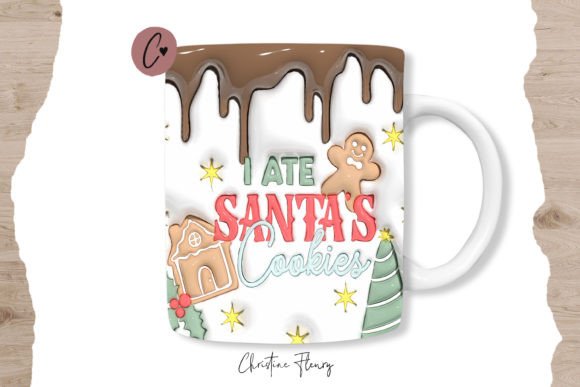
The design immediately strikes a playful, humorous tone. The phrase "I Ate Santa's Cookies" paired with the visual of a mug suggests a lighthearted, mischievous holiday spirit. For embroidery designers and Etsy sellers, this mood is gold. It moves away from the traditional, solemn religious imagery of Christmas and taps into the modern, meme-friendly humor that drives sales among younger demographics and families. The "inflated" style gives the mug a soft, approachable look, which aligns perfectly with the tactile nature of embroidered textiles. However, the challenge lies in maintaining that smooth, rounded 3D illusion without creating a dense, stiff patch of thread that ruins the drape of the garment.
Real-World Application: The Sweatshirt Test
To truly evaluate this machine embroidery design, I mentally placed it on a heather grey crewneck sweatshirt. This is a staple product for any craft business during the fourth quarter. The contrast between the likely bright colors of the mug—reds, whites, and perhaps a cookie brown—and the muted grey fabric would be striking. In this scenario, the design acts as a focal point. Because the graphic is self-contained, it doesn't require extensive background filling, which keeps the stitch count manageable and the production time lower. For a small shop product, speed and quality are equally important. If the digitizing is clean, this could become a bestseller for holiday embroidery collections.
I also considered its use on a canvas tote bag design. Here, the durability of the stitch becomes paramount. Tote bags carry weight, and the fabric stretches. An inflated style design needs robust underlay to prevent the stitches from shifting or puckering when the bag is loaded with groceries or gifts. If you are using this as a digital embroidery file for commercial products, ensuring that the satin borders are tight and the fill density is appropriate for canvas is critical. A poorly digitized version might look great on a mockup but fail in real life, leading to returns and unhappy customers.
Navigating Technical Challenges
While the concept is strong, the execution requires careful attention to detail. The term "3D inflated" implies gradients and shadows. In embroidery, we achieve this through thread color changes and stitch direction, not actual depth. If you are working with this embroidery file, you must check the thread color sequence. Does it use enough shades to create the illusion of roundness? If the transition between light and dark threads is too abrupt, the "inflated" effect collapses, and the mug looks flat. I recommend testing the design on scrap fabric first, specifically checking how the thread colors blend on your specific machine.
Another concern is the stitch density. Inflated designs often rely on heavy fill stitches to create the solid, balloon-like appearance. On thin fabrics, such as a lightweight t-shirt or a baby onesie, this density can cause puckering. If you plan to use this for baby embroidery, you must use a high-quality cut-away stabilizer and potentially adjust the tension on your machine. For custom apparel made from stretchy materials, a backing stabilizer is non-negotiable. Without it, the weight of the thread will distort the fabric, ruining the clean lines of the mug handle and the text.
Placement and Hoop Considerations
The layout of the 3D Inflated I Ate Santas Cookies Mug PNG suggests it is best suited for medium to large hoop sizes. Trying to shrink this down for a small left-chest logo on a polo shirt might result in lost detail, particularly in the lettering. Tiny text inside a complex graphic is a common failure point in embroidery. If the words "I Ate Santa's Cookies" become illegible when scaled down, the humor is lost. Therefore, I advise against using this on caps or hats unless you are certain the digitizer has optimized the text for small scales. Curved surfaces like caps also distort round shapes, so the "inflated" perspective might look skewed if not positioned perfectly at the center front.
For embroidered patch creation, however, this design shines. Patches allow for heavier stabilizers and denser stitching without worrying about garment drape. You can use a thick twill backing to enhance the 3D effect, making the mug pop out physically as well as visually. This makes it an excellent candidate for design assets intended for iron-on or sew-on applications, adding value to your finished product offerings.
Commercial Viability and Brand Consistency
From a business perspective, this design fits well within a broader holiday collection. It appeals to the "ugly sweater" party crowd and those who enjoy quirky, conversational pieces. For commercial embroidery projects, consistency is key. If you sell this on an apron, ensure the same high-quality digitizing is used on your kitchen towel line. Customers build trust when they see that your handmade product maintains its integrity across different items. A sloppy stitch-out on a towel can damage your brand reputation faster than a delayed shipment.
It is also worth considering the licensing. Before selling items made with this digital embroidery file, confirm the license terms. Some designers allow unlimited commercial use, while others restrict the number of physical items you can sell. As a professional, I always verify these details to protect my small business from legal issues. Additionally, check if the file format matches your machine. Whether you need PES, DST, or EXP, having the correct applique design or standard embroidery format saves time and prevents conversion errors that can corrupt stitch data.
Final Designer Notes
In conclusion, the 3D Inflated I Ate Santas Cookies Mug PNG offers a fun, contemporary twist on holiday decor. Its success in your embroidery project depends entirely on preparation. Test on similar fabrics, use the right stabilizer, and pay close attention to thread tension. If executed well, it will be a standout piece in your Crafts portfolio, driving engagement and sales through its charming, humorous appeal. Remember, the magic of embroidery lies not just in the design, but in the precision of the stitch. Treat this file with the technical respect it deserves, and it will reward you with a high-quality, profitable product.