Reviewing Gardening Planner Kdp Interior for Embroidery
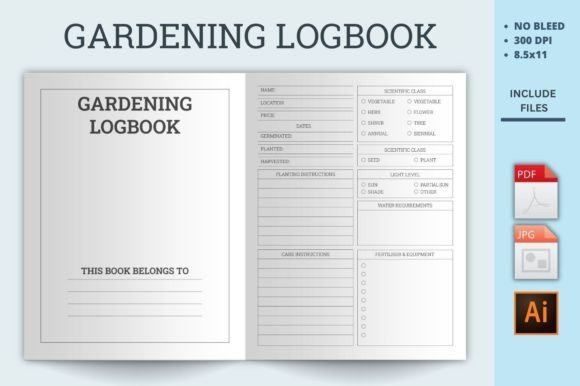
As a designer who has spent countless hours digitizing patterns and testing them on everything from stiff denim to delicate baby knits, I approach every new Gardening Planner Kdp Interior with a mix of curiosity and skepticism. We often see these interiors marketed strictly for print-on-demand books, but the visual assets within them hold immense potential for textile applications. The question is not just whether the graphics look good on a screen, but how they translate into thread, fabric, and tangible value for a craft business.
First Impressions: Mood and Visual Personality
When I first opened the files associated with this Gardening Planner Kdp Interior, the immediate impression was one of organic calm. The layout relies heavily on botanical motifs—fern fronds, succulent clusters, and hand-drawn gardening tools. For an embroidery designer, this is promising. These shapes are inherently compatible with various stitch types. The mood is earthy and grounded, which appeals directly to the current market trend favoring slow living and nature-inspired decor.
The detail level is moderate. It is not so intricate that it becomes a nightmare to stitch, nor so simple that it looks amateurish. This balance is crucial. When evaluating a design for real project use, I look for lines that can be cleanly rendered with a running stitch or filled smoothly with a satin stitch without excessive bulk. The visual personality here suggests versatility. It feels at home on a rustic linen apron just as much as it does on a modern, minimalist tote bag.
Real-World Application: The Custom Tote Scenario
To truly test the viability of this asset, I imagined a specific client request: a set of personalized garden totes for a local nursery’s spring sale. This is a common scenario for an Etsy seller or small shop owner. The goal is to create a handmade product that feels premium yet durable.
Using elements from the Gardening Planner Kdp Interior, I selected a central botanical illustration. On a canvas tote, the texture of the fabric plays a significant role. A heavy cotton canvas provides a stable base for embroidery, allowing the fill stitch areas to sit flat without puckering. If I were stitching this design, I would prioritize high-contrast thread colors. Earthy greens, terracotta oranges, and slate grays would pop against a natural beige background. The result would be a tote bag design that communicates quality and attention to detail, encouraging higher price points and customer trust.
Adapting for Apparel and Home Decor
Beyond totes, this design suite shines in custom apparel. Imagine a sweatshirt embroidery project where a small cluster of herbs is placed on the left chest. This subtle placement is trendy and professional. However, one must be cautious with stitch density. Sweatshirts are thick, and adding dense embroidery can make the garment stiff and uncomfortable. By simplifying the fill areas and relying more on outline stitches, the design remains breathable and soft.
For home decor, such as pillow covers or kitchen towels, the larger elements of the planner interior can be scaled up. A tea towel featuring a border of gardening tools creates a charming holiday gift or housewarming present. The key here is ensuring the design fits within standard hoop size limitations. Most home machines handle 5x7 or 6x10 hoops comfortably, so resizing the vector elements from the planner to fit these dimensions is a necessary step before digitizing.
Technical Considerations and Fabric Constraints
While the aesthetic appeal is strong, practical execution requires careful planning. Not every fabric behaves the same way. When working with textured fabrics like waffle knit or terry cloth, small details from the Gardening Planner Kdp Interior may get lost. In these cases, I recommend avoiding tiny lettering or fine lines. Instead, opt for bolder shapes that maintain their integrity despite the fabric’s pile.
Stretchy fabrics present another challenge. If you are applying this design to a cap or a fitted hat, the curved surface distorts the image. A design that looks perfect flat on the screen might appear warped when stitched on a curved brim. Testing on scrap fabric is non-negotiable. Always use a appropriate stabilizer—cut-away for stretchy materials and tear-away for stable woven fabrics—to prevent puckering and ensure the finished product looks professional.
Dark fabrics require special attention to thread choice. If you are stitching on navy or black, standard green threads might not show up well. You may need to use a underlay stitch in white or light gray to create contrast, or choose metallic threads for a decorative accent. This adds complexity to the embroidery project but significantly enhances the visual appeal.
Commercial Value and Brand Consistency
For creative entrepreneurs, consistency is key. Using assets from a cohesive collection like this Gardening Planner Kdp Interior helps build a recognizable brand identity. Whether you are selling digital embroidery file packs or physical embroidered patch items, having a unified visual language makes your shop look curated and professional. This builds buyer engagement and encourages repeat customers.
Moreover, these designs work exceptionally well for printable mockup creation. Before committing to production, you can place the digitized version of the design onto digital mockups of mugs, shirts, and bags. This allows you to gauge customer reaction and refine your marketing strategy. It is a low-risk way to test new design assets before investing in materials and machine time.
Designer Notes for Best Results
- Test on Scraps: Always stitch a test piece on the actual fabric you intend to use. Check for tension issues and thread breaks.
- Check Contrast: View your design in black and white to ensure the shapes are distinct and readable without color reliance.
- Verify Licensing: Before selling any commercial embroidery items, confirm the license terms of the original planner assets. Ensure you have the right to modify and resell the derived embroidered works.
- Mind the Density: Reduce stitch count in large fill areas to keep the fabric flexible, especially for wearable items like baby embroidery clothes.
- Hoop Selection: Choose the smallest hoop that fits the design to minimize fabric movement and maximize stability during stitching.
In conclusion, while the Gardening Planner Kdp Interior is marketed for print, its structural clarity and thematic warmth make it a valuable resource for textile designers. With thoughtful adaptation regarding stitch type, fabric choice, and scale, it can elevate a range of products from simple personalized gifts to boutique merchandise. The success lies not just in the image itself, but in the designer’s ability to translate two-dimensional graphics into three-dimensional texture. For the mindful maker, this collection offers a fertile ground for creativity, provided one respects the technical limits of the embroidery medium.